
Author: granitewordpress

New film careers programme developed for transition year students by Lord Puttnam

Film industry experts to gather at UCC to meet students and teachers


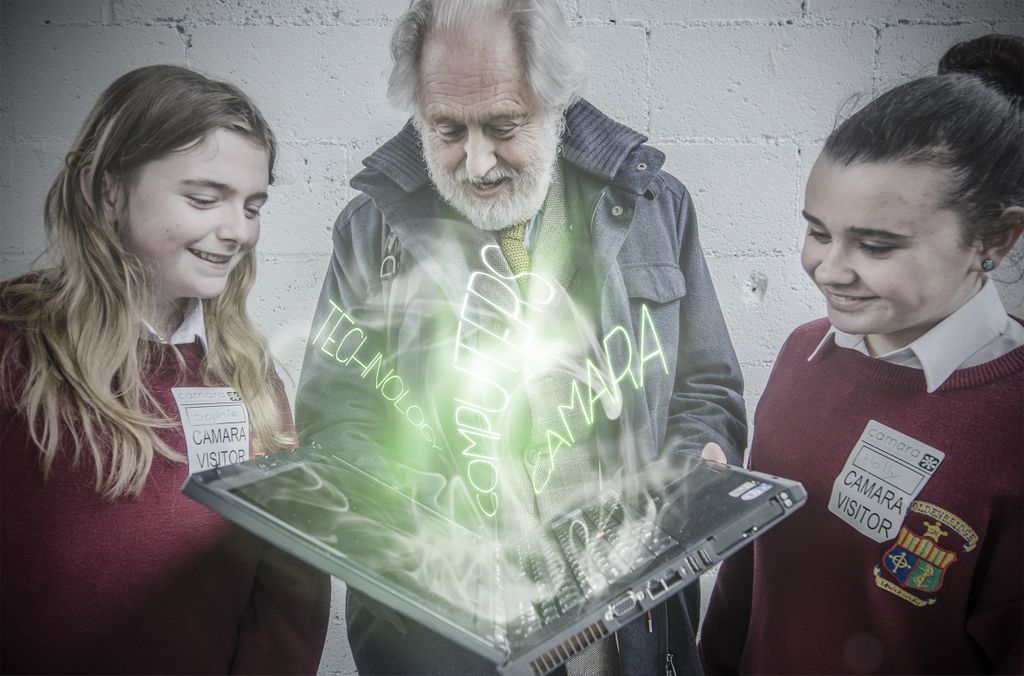
Transition year students from across Cork, with a passion for film making, have been selected to meet Oscar-winning producer Lord David Puttnam, and a host of film industry experts, at a special event in University College Cork (UCC) on Tuesday May 16th.


Since April this year these students have been participating in ‘Screen Careers for Transition-Year Students’, a new programme run by Atticus Education, the online education company chaired by David Puttnam, and supported by UCC and Fís Éireann/Screen Ireland (Screen Ireland). It aims to introduce students to the vast opportunities that exist across Ireland’s burgeoning screen sector, and to help them better understand the medium of film.


Five schools in Cork – Bandon Grammar School, Kinsale Community School, Schull Community College, Cólaiste an Phiarsaigh (Glanmire) and Terence MacSwiney Community College (Hollyhill) – participated in the programme. It included seminars hosted by David Puttnam on wide-ranging themes related to the screen industries. Topics included creativity and identity, the future of cinema, animation, and gaming, as well as practical advice on how to get a job in the film industry and opportunities in creative employment. Within every session, students shared their responses and opinions with the award-winning producer.


They also received a personal message from award-winning director Lenny Abrahamson, who urged students to consider a career in film. “There is a great series of roles, opportunities and lives to be lived in the film industry in Ireland, which is thriving and has been thriving for a long time.” Students also attended a small group session for each school with Cork-based creative producer, Alex Brady, as part of the programme.


Now students from these Cork schools will attend a special event in UCC which will celebrate this successful transition year programme and provide an opportunity for budding young film makers to meet Irish and international film-industry experts. Production activity in Ireland has continued to grow at a steady level over recent years. A production spend of €361,487 million was recorded by Screen Ireland in 2022, driven by both Irish and international productions across feature film, TV drama, documentary and animation – an increase of €4 million from 2019, the year preceding the COVID-19 pandemic.


Rapid development of the sector in Ireland means there is a pressing need to prepare for future demand, and to significantly increase the size of the industry workforce. A recent report from Screen Ireland on existing skills challenges sets out recommendations for the agency to ensure adequate scale and capacity are in place to meet this potential increased demand, including closer structured collaboration with third level education to address skills needs and working with industry stakeholders to communicate the numerous opportunities available in the screen sector.


A brand-new Leaving Cert course, Drama, Film and Theatre Studies, will launch in September 2024 on a pilot basis.


Speaking about the ‘Screen Careers for Transition-Year Students’ programme Lord Puttnam said “I think this programme is increasingly important because the film industry in Ireland desperately needs bright and enthusiastic young people to see it as a viable and attractive career option. In the hope that I’ve convinced the students of this over the last couple of weeks, it’s now a question of convincing their parents and career-guidance counsellors. Personally, I’ve found the whole experience to be incredibly valuable, I’ve learned so much from these enthusiastic young people about what they watch, where they watch it and why film remains important to them.”


Desiree Finnegan, Chief Executive at Screen Ireland, said: “As part of Screen Ireland’s strategy to invest in talent and skills for industry growth, we are proud to support this exceptional initiative for aspiring filmmakers to discover the wide range of exciting opportunities and career pathways available to them. The development of next generation talent is key to our ambitious vision of fostering creative screen storytelling and sustaining our highly skilled and competent crew base. The future looks bright and we hope this talented group will feel inspired to take the next step in exploring a rewarding and fulfilling career in the sector, building on the success and impact of the Irish screen industry on the global stage.”


Dr Ciara Chambers, Head of the Department of Film & Screen Media explained
“One of the challenges I face at open days is explaining to parents why it is worth choosing a creative course. While screen careers often work quite differently to more traditional pathways, they can open up incredibly rewarding job opportunities. As we have seen, the audiovisual sector in Ireland is booming, and there aren’t enough skilled professionals to take up the jobs available. We’ve been really inspired by the young people involved in this programme and we hope they’ll consider creative pathways. If they do, it’s clear they will make a significant contribution to further developing Ireland’s rich and diverse creative culture.”


Lord Puttnam’s productions include Chariots of Fire (which won four Oscars in 1981, including the Academy Award for Best Picture), The Mission (which won the Palme d’or at Cannes in 1986)The Killing Fields, and Midnight Express.


ENDS


Further on Irish screen industry


Screen Ireland-supported projects garnered over 150 awards and nominations at major international festivals and awards throughout the year. This high volume of recognition highlights the sustained growth, success and impact of the Irish screen industry on the global stage.


According to recent data from Screen Ireland, the film, tv and animation sector in Ireland is estimated to be worth over €692 million, comprising almost 12,000 jobs.


There are no signs of this success slowing down with a number of new studios coming on stream, and a new games tax credit recently launching. In fact, the entire global production industry is booming; Netflix recently revealed it has spent $6 billion making TV shows and films in the UK since 2020.


Students selected to participate in the UCC Screen Ireland programme include:


Niamh Toolen (Schull Community College)

Jackson Little (Schull Community College)

Megan Brown (Schull Community College)

Tadhg O Treasaigh (Schull Community College)

Angelica Keaveny (Schull Community College)

Eoin McKeon (Terence MacSwiney Community College)

Inés Velázquez (Terence MacSwiney Community College)

Elena Visconti (Terence MacSwiney Community College)

Liam Ó Caochlaoich Ó Ceallaigh (Coláiste an Phiarsaigh)

Oisin Ó hAinle (Coláiste an Phiarsaigh)

Sinéad Ní Rinn (Coláiste an Phiarsaigh)

Grace Ní Loingsigh (Coláiste an Phiarsaigh)

Aoife Nic Mhathuna (Coláiste an Phiarsaigh)

TJ Buckley (Kinsale Community School)

Sarah Hadden (Kinsale Community School)

Kiely Lehane (Kinsale Community School)

Jessica Bronikowska (Kinsale Community School)

Stephania Reilly (Kinsale Community School)

Cormac O’Dwyer (Bandon Grammar School)

Tadgh O’ Conchuir (Bandon Grammar School)

Conall McCauley (Bandon Grammar School)

Lauren Hitz (Bandon Grammar School)

Niamh Hutchinson (Bandon Grammar School)
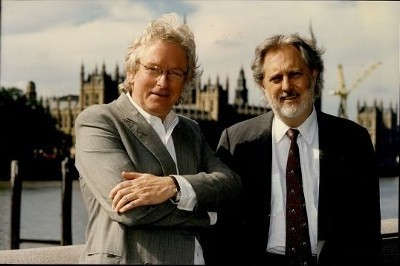
Hugh Hudson was the fulcrum around which ‘Chariots of Fire’ was built.

His passing, coming on the heels of the loss of Vangelis and the film’s screenwriter, Colin Welland, offer a moment to reflect on how incredibly fortunate I was, maybe we all were, to work together at a very particular point in our careers.

Nigel Havers referred to the fact that the film was made, with little likelihood of commercial success, by ‘a happy band of brothers’ who sincerely believed in the underlying issues the film tried to address.

Class, religion, commitment, misplaced loyalty, empty triumphalism – the film took aim at a whole slew of prejudices, and audiences drew a variety of conclusions – but not many left the cinema unmoved.

Hugh’s contribution was immense, and everyone involved benefited hugely as our subsequent careers developed.

It’s a strange thing, but the opening of ‘Chariots of Fire’ has an ageing ‘Aubrey Montague’ speaking at a Memorial Service, uttering these words: “now only a few of us are left, we who had hope in our hearts and wings on our heels”.

With Hugh’s passing, how profoundly those words are echoing today.


David Puttnam

11th February 2023

Over the past decade, I’ve been teaching students across Asia, Australia, Europe and the US from my office in rural south-west Ireland. When I started this endeavour, virtual classrooms were sniffed at by most in higher education, from first-year students to vice-chancellors. In spite of this, I stuck with it, working with colleagues to ensure the best possible connectivity so that the experience would be in no way suboptimal for my students.

We experimented with different programmes, grasping and embellishing the things that worked and doing away with those that didn’t. Eventually, emerging technologies started to inform how each class was designed. By now, we have delivered well over 500 seminars to 3,500+ attendees, using more than 10,000 film clips, slides and other multimedia resources.

Since 2012, the uptake of virtual learning has accelerated the world over. Of course, the great catalyst for this expansion was the pandemic, when students and teachers everywhere were forced to rethink teaching and learning from inside their own homes. Universities the world over were forced to confront their ongoing issues with digital access and, by December 2020, 92 per cent of students in the UK were learning either fully or mostly online. Teaching practitioners discovered that virtual classrooms, when used correctly, could be extremely effective.

Better and more accessible technology has meant that learning online has outlasted the darkest days of the global lockdowns. In a survey published in September by Jisc, UK higher education’s main technology organisation, students said they now prefer blended learning to in-person. Last month, a review of blended learning at UK universities by the Office for Students found that students value “the flexibility of asynchronous online lectures” as it allows them to learn at their own pace.

And yet, we still talk about “digital education”.

In his excellent 2021 report on digital teaching, Sir Michael Barber found that when we are designing successful education programmes for the future, “technology cannot just be bolted onto existing teaching material”. It seems to me that part of the problem boils down to the way in which we perceive education itself. Digital technology will never be properly integrated if it is seen as something separated from the hard work being practised in-person, day in and day out in the classroom. Nobody ever mentions “digital communication” any more – we simply email, WhatsApp, instant-message and share stories on social media without a second thought. We need to start taking the same approach to how we learn.

The best way to break away from the idea that digital education and education are separate categories is to ensure practitioners are given the resources they need to truly understand the technological programmes they’re expected to use. Government has a key role to play here, but it will also require some perceptive foresight on the part of teachers and – especially – curriculum builders.

Technology will inevitably become better integrated into lesson plans as more and more “digital natives” from Generation Z enter the workforce, but the fact remains that digital tools are living, fluid things, ever-changing and developing. If we have learned anything from the past few years of virtual teaching, it is that practitioners need to better prepare for how their future students will learn. Surely this should be the goal of all professional development, to make us better at delivering uncontested outcomes.

I’m personally convinced that the most immediate challenge facing us lies in finding a satisfying and sustainable balance between the collective and individualised experience. Educators should be keenly aware of the rise of entertainment pursuits that provide a bridge between the solitary and the shared – most notably, immersive gaming. Of course, I am not advocating for the “gamification” of education. Rather, I am suggesting that we should acknowledge the new environments that young people want to inhabit and adapt them for the classroom.

One of the buzziest examples is the so-called metaverse: the imagined future of the internet, characterised by virtual and augmented reality. Only last month we learned that Chinese universities are investing heavily in metaverse technologies in order to establish their leadership in the field. Recent research undertaken by educationalists in the US has found that virtual learning can help increase interest and motivation among students and improve both personalisation and collaborative learning. However, many challenges still exist with the use of virtual or augmented technologies, not least in relation to accessibility and affordability.

The goal should not be to replace our brilliant physical classrooms with headsets that promise trips to distant galaxies or to the bottom of the ocean. But we must aim at least to treat these emerging technologies as exciting tools – additions to our arsenal – and to engage with what they can offer when designing future curricula.

The educational metaverse should not be siloed off into its own category of learning. Instead, like online lessons and digital resources, let’s integrate it into existing and emerging pedagogies before it’s too late.

David Puttnam is an educator, film producer and a recently retired member of the House of Lords. Since 2012 he has been chairman of Atticus Education, a pioneering education company delivering audio-visual seminars on all aspects of the screen-based industries to students around the world. He is chair of the Education Advisory Board of Nord Anglia Education and president of the National Film and Television School.

This has been a week of tremendous successes. Congratulations to The University of Sunderland film production and photography teams and students on the number one spot in the Guardian’s Best Universities League Tables. This is what 25 years of commitment can achieve!

UK universities ranked by subject area: film production and photography – The Guardian

I would also like to offer my sincere congratulations to Lachlan Pendragon, a Griffith University alumni who’s terrific “An Ostrich Told Me the World Is Fake and I Think I Believe It” deservedly won a Student Academy Award for Animation. I could not be more proud!

David.

Following a competitive application process for the third year running, Atticus Education, Fís Éireann (Screen Ireland), Northern Ireland Screen and Future Screens NI are delighted to announce this year’s eight Puttnam Scholars.

This cross-border initiative offers promising filmmakers access to interactive online masterclasses with Oscar-winning producer David Puttnam (Midnight Express, Chariots of Fire, The Killing Fields) and each a €1,250 scholarship from Atticus Education towards their career development. The scholarship bursaries are supported by Accenture in Ireland.

The eight participants (four from Northern Ireland and four from the Republic of Ireland) are all emerging writers, directors or producers who have made, or are in the process of developing, their first feature or television drama. Chosen by Future Screens NI and four Irish higher education institutions, the participants are:

· Dee Harvey selected by Future Screens NI

· Jules Charlton selected by Future Screens NI

· Margaret McGoldrick selected by Future Screens NI

· PJ Hart selected by Future Screens NI

· Tara Hegarty, Writer/Producer, nominated by Technological University Dublin

· Lia Campbell, Writer/Director/Producer, nominated by Institute of Art, Design & Technology Dun Laoighaire

· Turlough Ó Cinnéide, Director, nominated by Technological University of the Shannon (formerly Limerick Institute of Technology).

· Mark Smyth, Writer/Director, nominated by Dundalk Institute of Technology

David Puttnam said, “I’m seriously impressed with the calibre of applicants wishing to join our list of Puttnam Scholars this year. We now have eight highly qualified participants, bursting with talent and enthusiasm, and ready to embark on the next phase of their filmmaking journey with Atticus Education – I hope we do them proud!”

A 2021 Puttnam Scholar, Ali Doyle (Head of Development, Wild Atlantic) said of her experience, “Being selected as a Puttnam Scholar was both an incredible honour and an invaluable experience. Across each masterclass, not only did I learn and strengthen my knowledge in these dedicated fields, but the awe-inspiring passion of David Puttnam and each of the invited guests, acted as a reignition of why we make movies and TV, how through these audio-visual mediums, we can teach as much as we can entertain. To all the Puttnam Scholars of 2022, congratulations, you deserve this and enjoy every second of it!”

Over the course of the sessions, Lord Puttnam will explore the following themes: The Power of Identity; The Evolution of Creativity; Fact or Fiction; Builders and Brokers; Music and Meaning; and Interpreting the Future. The sessions are designed to enhance participants’ understanding of the creative process and the cultural context within which the screen industries operate.

Seminars have in the past included conversations with several special guests, each providing insights into their own careers and thoughts on the industry. Guest have included Lenny Abrahamson, Ralph Fiennes, Paul Greengrass and Mark Cousins.

Ends.

Amy Castle

Communications Lead,

Atticus Education

[email protected]


About Atticus Education

Atticus Education is an online education company created by film producer and educationalist, Lord Puttnam. Atticus delivers live interactive seminars to educational institutions around the world, providing high-quality resources to support learning using advance digital distribution systems. Atticus provides content relating to different aspects of the creative industries. David Puttnam is the chair of Atticus Education. He spent thirty years as an independent producer of award-winning films including The Mission, The Killing Fields, Local Hero, Chariots of Fire, Midnight Express, Bugsy Malone and Memphis Belle. His films have won ten Oscars, 31 BAFTAs and the Palme D’Or at Cannes. From 1994 to 2004 he was Vice President and Chair of Trustees at the British Academy of Film and Television Arts (BAFTA) and was awarded a BAFTA Fellowship in 2006. He retired from film production in 1998 to focus his work on public policy as it relates to education, the environment, and the creative and communications industries. He was awarded a CBE in 1982, a knighthood in 1995 and was appointed to the House of Lords in 1997 and retired in 2021. In France he was made a Chevalier of the Order of Arts and Letters in 1985, becoming an Officer in 1992, and a Commander in 2006. He is the recipient of over 50 Honorary Degrees, Diplomas and Fellowships from the UK and overseas. https://www.davidputtnam.com/masterclass-seminars @DPuttnam

A GREAT COMMUNICATOR. David Puttnam is a British film producer, educator, and environmentalist who recently retired as a member of the House of Lords, where he served on the Labour Party benches for 24 years. His many celebrated film productions include Midnight Express, Chariots of Fire – which won the Academy Award for Best Picture – The Killing Fields and The Mission.

You can listen to this interview as a podcast here.

David Puttnam, do you still produce films?

No, I joined the House of Lords in 1997 and my last film came out in 1998.

Has cinema been the great passion in your life?

Yes. I was interested in connecting up my ideas with audiences. Most of the films I made originated from concepts that I started.

Were you surprised by the success of Chariots of Fire?

I was knocked sideways. My earlier film Midnight Express was extremely well received but did not reflect me or my values. Chariots of Fire on the other hand was almost an act of defiance, and a pivotal moment. No one was eager to make a film about 1924 Olympians running around in white shorts. It was not an obviously popular theme at the time.

Why did you make it?

To argue against the view that a decent person with a decent set of values was going to lose out in the great race of life. The protagonist Eric Liddell was a guy who did absolutely the right thing – and won. You don’t have to end up being a loser if you work through your conscience.

Did success allow you to do what you wanted?

Chariots allowed me to do a film about Northern Ireland called Cal, not a huge success but a good film. The Killing Fields was a big success for me. It won one of my two Donatellos. Then I made The Mission, which was also, I think, a fine film which won the other.

David Puttnam, why did you want to make a film of Inside the Third Reich, a book written by the Nazi architect Albert Speer?

Speer was a young, ambitious architect who made a political decision about his life very early on and joined the Nazi Party as a way of accelerating his career. It fascinated me, because if my country had been in the same catastrophic state that Germany was in the 1920’s and I was ambitious, I would quite possibly have been tempted to look around for where the opportunities lay. I felt empathy for the fact that he’d made a decision at that early point in his life that had catastrophic consequences. Sandy Lieberson and I met him several times, and he was good enough to decide that the film should be made by young people. I then hit all kinds of incredible roadblocks, and the film of Inside the Third Reich was never made, but we’d accumulated a vast amount of research over a period of two years, so we took all that research and financed two documentaries, The Double Headed Eagle and Swastika. In those films we tried to tell the story of how seductive the Nazi regime was at the time it emerged into power between 1929 and 1933, and what chaos Germany was itself in at that time.

Did the story of Albert Speer become a metaphor for you?

I’ve used it as a paradigm for years. Today we are similarly challenged. Unless we wake up and understand the fragility of democracy and that the ramifications of climate change are likely to ask huge questions of our democracies, then we are very likely to find ourselves travelling down the same road that Speer found himself on.

When you met him in Heidelberg was Speer repentant?

Yes, but more interesting was the point at which he felt he should have known better. He chose Kristallnacht in 1938 as the crucial moment for him. His architecture professor was a well-known Jewish architect, and Speer said, “I should have understood what was going on, but I was more worried about the destruction in the town and the glass in the streets and everything else – and I didn’t get it.” He should have understood much earlier, at the time of the burning of the Reichstag. For five years his moral compass had drifted, and because his moral compass didn’t correct itself he was a lost soul in 1938.

Was he flattered by the importance of being the architect of the Nazi regime and so close to Hitler?

Absolutely. A combination of flattery, hubris, all the things that many people – and I include myself – are vulnerable to. He fell for it, hook, line and sinker.

Why did you get involved with politics in the 1960s?

It was an era in which, if you were reasonably successful, you had to decide what side of the barricades you were going to stand on. I was of the President Kennedy generation, full of hope, full of optimism. Following his death, and the subsequent assassination of Martin Luther King and Bobby Kennedy in 1968 it was hard not to become radicalized. In fact I rather despised people who weren’t prepared to set out a clear position for themselves.

Has Britain changed since the times of Chariots of Fire?

Britain is unrecognizable since the 2012 Olympic Games. It’s a country that has badly lost its confidence. This government is sleepwalking – or maybe worse than simply sleepwalking – into an era of authoritarianism which I find very uncomfortable, and which I feel the absolute necessity to call out.

David Puttnam, why did you title the report of a UK parliamentary Select Committee that you chaired Digital Democracy and the Resurrection of Trust?

I was originally going to call it The Restoration of Trust, but the evidence we took was so serious in terms of the breakdown of trust in public officials, almost in each other, that I felt it required a form of ‘resurrection’ to allow us to begin to re-emerge from the increasingly dark place in which the UK and many of the Western democracies find themselves. Although Italy is very lucky to have Mario Draghi. I’ve spent enough time with him to know he’s a fine and extremely principled man.

Will the UK find a way to refashion itself in its post-Brexit situation?

History will show Brexit to have been a catastrophe for the UK. I don’t think it’ll come out of this present situation well at all. The need at the moment is to attract people around the concept of trust. How do we rebuild trust? How do we recreate trust? If we could do that, then anything becomes possible. If we fail to re-create trust, it’s over.

Do you trust Keir Starmer, the leader of your own Labour Party?

Yes, I do. He has to resist the temptation to be pulled away from the center of his party but I think that’s his instinct and he is a decent, honest, truthful man. The Labour Party in effect took a poison pill when it elected Jeremy Corbyn and has still not recovered its confidence.

How well has the UK handled COVID-19?

It’s gone in waves. The initial handling was very bad, and eventually there will be a public enquiry which will establish that. The speed with which the jabs were created was impressive, but we’re in danger of falling back into complacency.

Is the strongest democracy in Europe still the British one?

My fear lies in the early consequences of climate change, and the refugee crisis that will accompany it. When the impacts of food and water scarcity really hit and migration to western Europe begins in a serious manner, that’s likely to prove – and this is very frightening – the perfect trigger for authoritarian politicians to argue, “We’ve got to stop this. We’ve got to stop these people.” I’ve no doubt that will happen; it’s how we as democracies deal with it that will determine our future as societies firmly based on social morality and the rule of law.

But British people will reject any system other than democracy?

I wish I could be sure of that. Under pressure, and frightened into the belief that the issue of climate migrants might become a determining factor in their lives, I don’t know what the British people would decide.

What are the issues in Britain today?

One, not sufficiently discussed, is the fragility of the Queen. The one element of cohesion in Britain at the moment is respect for the Queen. Her death would ask huge questions, particularly in Scotland, where she retains enormous affection. People don’t seem to fully realise how serious a crisis the death of the Queen could provoke.

David Puttnam, are you proud to have chaired the Committee that saw through the world’s first climate change bill in 2008?

Enormously proud. I’ve been involved in the environmental movement since the early 70s, so it’s a world I know well. I’m trying to get my colleagues to better understand the direct political correlation between the ramifications of climate change and the future stability of democracy.

Can we make the transition to Net Zero through technical and scientific progress?

Science can make some big wins for us, particularly in the area of energy, which is by far the greatest problem. But we also need to work on education, preparing young people to become more resilient and more understanding of what might be required of them. I’m also not aware of there being any contingency plans or funding in place to deal with what will be very real large scale emergencies. I once gave a speech comparing human beings to meerkats or gerbils; animals that are brilliant at alerting themselves to immediate danger but with little capacity to understand let alone act upon longer-term dangers. I’m afraid we as human beings are similar. We are pretty good at dealing with crises, but terrible at planning and anticipating them.

What discussions have you had about how best to handle the migration issues?

Not sufficient, because I’ve been very tied up in the environmental mitigation world. I would definitely like to do more work on these migration issues, initially through UNICEF, of which I was U.K. President for seven years from 2002 to 2009.

Why did you decide to live in Ireland?

I love the place, I love the people. It has spirit and ingenuity, and it has all the things that, growing up, I thought Britain had. I’ve been somewhat pessimistic about the UK for some while now. In 1988 when I came back from California I realised something had changed in me; that I was very much a European. I got closely involved with European cultural organizations. Twenty of us founded the European Film Academy and I became engaged in other cross-European media ventures; I felt very much ‘a European’ and still do. We originally purchased this house on the West Coast of Ireland as a summer home, but over the years we spent more and more time here, made more friends, and decided it was where we would live out our old age. Now we are now hopefully waiting for our Irish citizenship to come through.

You would rather be Irish than British?

I’d rather be European than British. As a kid I wanted to be an American, I will hopefully now die as a republican and a European!

Do the people of Northern Ireland feel British?

This is a moveable feast. If you allowed the Theresa May compromise to work its way through, and both sides of the border to operate harmoniously, I do believe it would lead to the evolution of a successful united Ireland, but it won’t happen in my lifetime.

Will Scotland and Wales also leave the union?

If I were a Scot, I would feel marginalized by England. There is no reason why Scotland shouldn’t be a perfectly viable economic entity, like Finland or Estonia. Scotland will ultimately leave the Union, but I can’t see how Wales can economically survive by itself. The possibility of Wales becoming a socially independent principality, whilst remaining within – I don’t know what they’ll call it – England/Wales, is more likely.

What is the reality of the ‘special relationship’ between the UK and the USA?

Since the beginning of the Obama presidency, it’s been growing much more distant. The British have to start getting rid of their illusions about that relationship. In parliament I tried to explain to the Brexiteers how the Senate and Congress worked, and that around 11 members of the Senate and 31 members of Congress self-identify as Irish-American. Those people will not go before their electorates and support a situation in which the Good Friday Agreement is under threat. Pushing through a trade deal against a strong Irish-American congressional block was always a total fantasy.

What about the UK’s relationship with China?

The U.K.’s relationship with China is chaotic. China is a country that’s historically reluctant to break treaties. The UK and Boris Johnson’s apparent indifference to the sanctity of international treaties is quite different from their culture, which must really puzzle and ultimately disturb the Chinese.

It seems the Chinese are generally disappointed by Europeans, while America is at least a clear competitor?

China stole all of our capitalist clothes but didn’t bother to embrace our version of democracy. Historically China has always imploded from within, so their principal concern is internal stability. The leadership fully understand the consequences of an internal societal implosion. They should be focusing on trying to close the gap between the relatively wealthy southeast of the country and the relatively poor northwest. The danger is that in order to create greater cohesion they may seek to inflame external tensions.

Could China become a threat to world peace?

At some point beyond my life span the score between China and Japan will likely be settled. The relationship with Korea has also never been fully reconciled. What surprises me is that China hasn’t been more patient. I would have expected the sort of belligerence that we’re seeing from China to have waited for at least another decade. Unless their internal situation is more fragile than I’ve been led to believe, then I don’t see what their rush is.

Do you have another film project that you would like to achieve?

How wonderful it would be to become the world’s oldest film producer! I’d like to have made a big musical, and I always wanted to make a film about the First World War, trying to show how that ghastly conflict had its roots in the mistakes and misadventures of international diplomacy. The truth is that well-intentioned people, sitting down and understanding the fears and expectations in each other’s hearts, can achieve more than we realise.